Community Voices
Community Action Partnership of Hennepin County (CAP-HC) conducts a Community Needs Assessment every three years to understand the evolving needs of people with low incomes in our community.
To conduct these comprehensive assessments, we gather qualitative and quantitative data that delves into the causes and conditions of poverty.
Listening to our community both directly and through community-based organizations allows CAP-HC to develop programs and services that address the specific factors that cause and reinforce poverty, identify gaps in services and options for addressing them, and support organizational strategic planning that aligns with community needs.
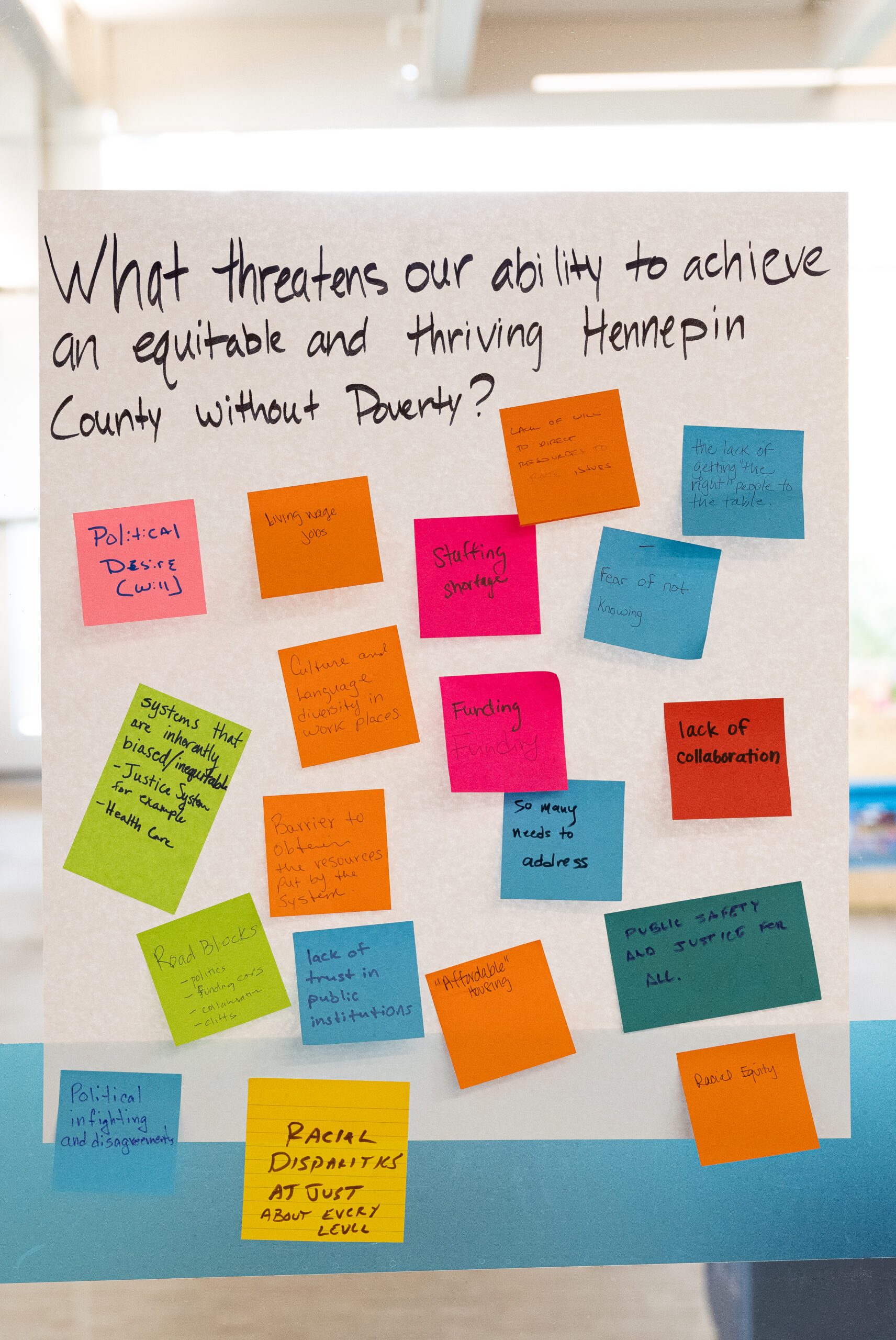
2025 Community Needs Assessment
CAP-HC is pleased to present key themes from its 2025 Community Needs Assessment, reflecting the voices and lived experiences of our neighbors.
- Rising Costs are the Primary Drivers of Instability
For many households, employment alone no longer guarantees stability. Increases in food, housing, and utility costs have outpaced wage growth, forcing a growing number of working residents of Hennepin County into constant trade-offs and increased reliance on emergency supports. - Food, Housing, and Transportation are Critical Tipping Points
Food costs have the greatest impact on household stability, followed closely by housing. Furthermore, access to a reliable vehicle is a necessity; transportation barriers can quickly cascade into job loss or housing instability. - Dignity and Efficiency in Service Delivery are Highly Valued
Residents define quality assistance as being timely, easy to access, and delivered in a respectful manner. Long application timelines and complex systems act as barriers that can prevent people from receiving help before a situation escalates into a full-blown crisis. Similarly, poor customer service experiences can dissuade residents from seeking additional assistance. - Geographic and Systemic Gaps in Service Access are Barriers for Residents
Significant geographic disparities persist across the county. ZIP codes with the highest concentrations of financial vulnerability do not always have proportional access to nearby services, reinforcing the need for coordinated, countywide strategies. - Marginalized Communities are Experiencing Heightened Fear and Uncertainty
Broader policy shifts and federal changes have contributed to fear among residents. Community members are experiencing increased nervousness about seeking support, highlighting the vital importance of trust and culturally responsive outreach.
Read the full report to learn more about how we engaged with community members, and what we learned from them.
2022 Community Needs Assessment
CAP-HC is pleased to share insights from our 2022 Community Needs Assessment (CNA) with the broader community. Major themes from the 2022 CNA are outlined below:
- Behind us is a Village
When seeking support, community members tap into their social networks (family, religious institutions, and community service organizations). - Improving Information Accessibility
Community members are calling for a wider array of access points to information about services and how to navigate eligibility requirements. - Compounding Factors Influence Economic Instability
Participants talked openly about interrelated factors influencing their economic stability. Economic instability was often a symptom of a deeper issue such as living with a chronic condition or becoming unhoused—issues which are exacerbated by systemic barriers like inadequate access to affordable housing, quality mental and physical healthcare, or reliable transportation. - Uproot Economic Instability through Long-Term Wealth Building
Participants want to break the cycle of revisiting services to make ends meet, but systemic barriers impede their progress toward financial stability. - More Choice & Autonomy: Reclaiming Time & Livelihood
Community members are trying to survive while simultaneously spending a lot of time overcoming barriers to programmatic support. They want service providers to see them as more than people with lower incomes. They are people who have dreams to be entrepreneurs, activists, and more.
Read the summary or full report to learn more about how we engaged with community members, and what we learned from them.